-
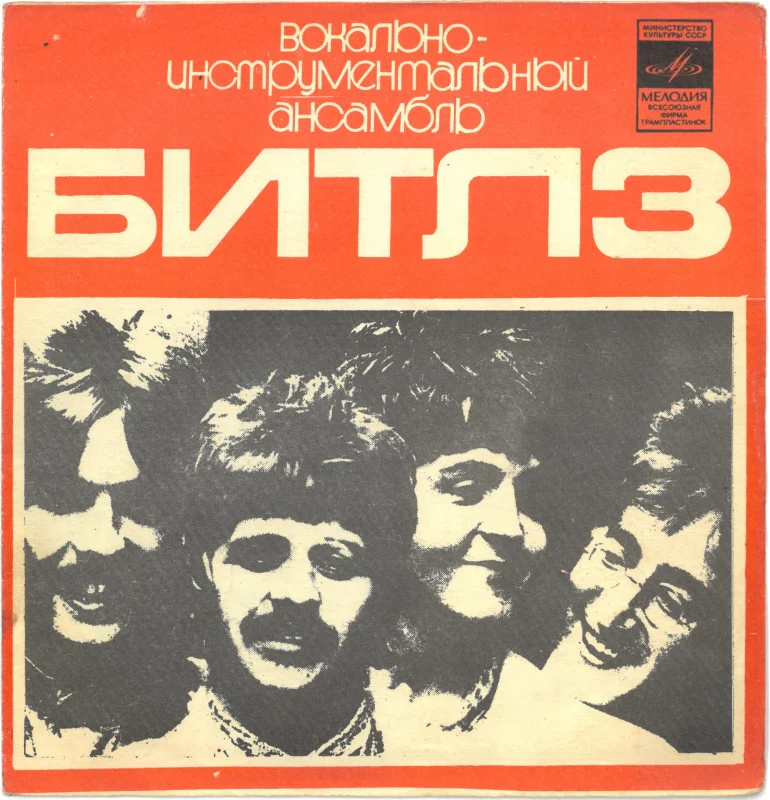
The Beatles Official Releases in the USSR
People in the USSR first learned about The Beatles in the early 1960s, at the peak of beatlemania. At that time, newspapers wrote sarcastic articles criticizing pop music. Soviet articles usually criticized The Beatles appearance and the “primitive” nature of the music. But then the situation slowly started to change. Soviet Press on The Beatles Full story →
Soviet Bands
-

Ole Lukkoye
The experimental band Ole Lukkøye (often just “Ole Lukoje”) formed in 1989 by keyboardist Boris Bardash and bassist Andrei Lavrinenko after their stint in the art-rock group Season of Rain.…
-
Zoopark (The Zoo)
Zoopark was one of the most influential bands to come out of the Soviet rock underground, and its leader, singer-songwriter Mike Naumenko, is still a huge figure in Russian rock…
-
Bravo
The story of Bravo begins in the fall of 1983, when Moscow railway engineering student Evgeny Havtan auditioned for the band Postscriptum, then led by future rock star Garik Sukachyov. The chemistry didn’t click, but the…
-
Avtomaticheskie Udovletvoriteli (AU)
In the summer of 1979, Andrei Panov — quickly nicknamed Svin’ — gathered a circle of bored, restless young people who were fed up with Soviet monotony and uninspired rock. Panov had decent…
Soviet Rock Albums
-
Aquarium — The Triangle (1981)
When you want something—not consciously, but with your whole being—it comes true. In the spring and summer of 1981, in a studio that quite literally fell from the sky into…
-
Jimi Hendrix’s Cherry Garden: The First Soviet Psychedelic Rock Album (1973)
Despite Tropillo’s confidence as a pioneer, the album format in the USSR likely emerged a bit earlier than during his active period. Yuri Morozov, a musician and sound engineer who…
-
The First Soviet Original Album Cover Art: On the Wave of My Memory (1976)
Until the 70s, Melodiya sleeves were pretty much all the same, except for a few rare ones that were sold abroad. Some were used as advertising space for Soviet monopolies,…
-
Aquarium — Radio Africa (1983)
Two summers had already gone by with mass late-night bike rides through the then-popular resort of Solnechnoye (see Music of the Silver Spokes). That’s how the album began — first in…
-
Aquarium — Thirst (1987)
One of the first 7-inch rock albums legally published on Melodiya, recorded by Tropillo. About a year after 10 arrows, Alexander Florensky was asked to design another record — this…
-
Aquarium — 10 Arrows (1986)
The studio went under renovation (as it turned out later—forever), but the songs demanded immediate recording. (Maybe I’m wrong, but it always seemed to me that if a song is…
-
Aquarium — Blue Album (1981)
In the summer of 1980, a barely familiar figure named Andrey Tropillo appeared out of nowhere and said, “I’ll help you.” The first sign of that help was a homemade…
-
Kino — 45 (1982)
The debut Kino’s album was recorded at the Pioneers’ Palace, which later became the AnTrop studio, assembled by Andrei Tropillo from equipment collected from various organizations. Tropillo had already seen Tsoi and Rybin at an apartment concert,…
-
Mify (Myths) — The Way Home (1980)
Mify’s hiatus lasted until 1980. A year earlier, Andrei Tropillo had set up what soon became the famed underground recording studio AnTrop and—after a year of experimenting with live tapes…
Producers, Designers & Sound Engineers
-
The Artists Behind AnTrop’s Covers (Kibalchich & Trifonov)
At first, AnTrop’s bootleg records looked like perfect copies of the originals. But a closer look revealed subtle — and sometimes not-so-subtle — differences. Two artists in particular became AnTrop’s go-to designers: Nikolai Kibalchich and Yuri Trifonov.
Soviet Bootlegs of Iconic Rock Albums
-
The Beatles — Past Masters
A very small run of 3,000 copies. Santa’s Past Masters mirrors the original CD Past Masters Vol. 1. Tracks from Vol. 2 had already appeared (mostly) on the label’s Hey…
-
The Beatles — Hey Jude
Don McCullin’s photograph was replaced with a compositionally similar image. On different print runs, the initials of Nikolai Kibalchich appear either on the right or on the left, but the…
-
The Beatles — Let It Be
It looks like the cover was taken from the CD booklet, enlarged, and left unchanged—the white frame around the photos is gone. The font of the title was swapped out…
-
The Beatles — Abbey Road
It’s interesting that Abbey Road, the band’s final album, was actually the last Antrop bootleg released with Tropillo’s involvement in 1993. Since the album was such a hit, a bunch…
-
The Rolling Stones — Let It Bleed
The cover of the Russian bootleg was carefully redrawn by Nikolai Kibalchich, and all lettering was translated into Russian.
-
The Beatles — Magical Mystery Tour
In 1991, the Soviet bootleg label Antrop released its own version of Magical Mystery Tour. This edition combined the album with Yellow Submarine, though the two records were later separated and sold…
-
The Beatles — Sgt. Pepper’s Lonely Hearts Club Band
The Russian Sgt. Pepper’s cover is full of quirky local touches that set it apart from the original. The text on the bass drum was localized while keeping the original style. Designer…
-
The Beatles — Revolver
The AnTrop version of the Revolver sleeve was almost entirely rebuilt. The faces were redrawn, photos were either replaced or repositioned, and the cross-hatching is slightly lighter than on the original. John…
-
The Artists Behind AnTrop’s Covers (Kibalchich & Trifonov)
At first, AnTrop’s bootleg records looked like perfect copies of the originals. But a closer look revealed subtle — and sometimes not-so-subtle — differences. Two artists in particular became AnTrop’s go-to designers: Nikolai Kibalchich and Yuri Trifonov.
USSR Piracy History
-
The USSR’s First Pirate Compact Disc — From a Rolling Stones Fan
The first pirate CD made in the USSR was probably the “Rolling Stones — 19 Nervous Songs” (SUM 90 001) CD, which was made at Melodiya. Some sources call it the only Rolling Stones album produced in the USSR with a license, but it was actually released illegally by the Russian company Orfeus. From 1989…
-
Andrey Tropillo — The First Soviet Rock Producer
Tropillo grew up in a household with a musical and technical background, and he got into foreign records through his brother-in-law. He also got into electronic music in school. In…
-
AnTrop — Soviet Pirate Music Label
In 1978, Andrey Tropillo declared he wanted to build a vinyl plant and flood the USSR with Beatles LPs—an ambition friends wrote off as delusional. A decade later, as director of…
Soviet Bootleg Labels
-
Russian Disc (Soviet Music Label)
In the mid-1980s, Perestroika began: private business was partly legalized in the form of “cooperatives.” The Soviet Union was trying to adapt to a free market and democracy. Authorities and entrepreneurs started…
-
LAD (Soviet Music Label)
LAD (Russian: Ладъ, often rendered “LAD’”) was a Moscow-based company connected to Melodiya—the USSR’s state record label—and its international broker Mezhdunarodnaya Kniga (“Mezhkniga,” literally International Book). Through Mezhkniga, Melodiya exchanged rights with Western labels and, by…
-
SNC Records (USSR Music Label)
SNC Records was one of the first serious attempts to run a legal, private record label inside the late-Soviet system—and make it work at scale. The story centers on musician…
-
AnTrop — Soviet Pirate Music Label
In 1978, Andrey Tropillo declared he wanted to build a vinyl plant and flood the USSR with Beatles LPs—an ambition friends wrote off as delusional. A decade later, as director of…
English Bands in Soviet Magazines
-
Rovesnik: The Soviet Teens’ Window to the World
Rovesnik — launched in July 1962 and published until 2014 — was a Soviet youth magazine intended for readers aged 14 to 28. With print runs in the millions during its…
-
The Club and Amateur Performances: Another Brick in the Wall
It was the only magazine, apart from Krugozor, that featured flexible covers. Despite the period of Brezhnev-era stagnation, the magazine’s covers in the 1980s stood out for their interesting graphic…
-
Angliya (England): The British Invasion No One Talks About
From 1962 to 1993, a curious magazine quietly circulated through the Soviet Union — Angliya (England), the British counterpart to Amerika, a US-published magazine printed in the USSR as part of a Cold…
-
Student Meridian: A Soviet Youth Magazine at the Crossroads of Culture
Student Meridian was one of the leading Soviet youth magazines, founded in 1924 and published monthly from the 1970s. Mixing literature, social commentary, and pop culture, it became known for…
-
Krugozor: The USSR Magazine That Let Soviet Youth Hear the World
Krugozor, a portmanteau meaning «horizon», “outlook” or “panorama,” was created in 1964 in the Soviet Union. It was an innovative monthly publication that combined literature, music, and socio-political commentary. What…
Soviet Audio Mediums
-
The First Soviet Original Album Cover Art: On the Wave of My Memory (1976)
Until the 70s, Melodiya sleeves were pretty much all the same, except for a few rare ones that were sold abroad. Some were used as advertising space for Soviet monopolies,…
-
Sad Story of Soviet Compact Disc Players
Back in April of 1983, readers of the Soviet magazine Radio might’ve been intrigued by a small photograph on the back page: a futuristic rainbow-colored disc standing upright beside a…
-
History of Laser Discs in USSR
The Electronpribor plant in Fryazino made a batch in 1993, long after the Ministry and the USSR had gone out of business. With the Soviet production network gone, no manufacturer…
-
Soviet CD Production on Melodiya in 1990s
One of the big pluses of making records at the All-Union Enterprise “Melodiya” was that they had their own master disc recording unit. A lot of plants didn’t have the…
-
MOZG: A Pioneer in Compact Disc Production in the USSR
I started at the Moscow Gramzapis Plant (MOZG) in 1978, just two months after it opened. The plant was actively hiring for different departments and labs. I already had experience…
-
Russian Columbia — Shellac and Vinyl Production in Pre-Soviet Russia
In the early 20th century Columbia Phonograph Co. entered the vast Russian market. The Americans were among the first to introduce “talking machines” on the banks of the Neva, and their shop…